
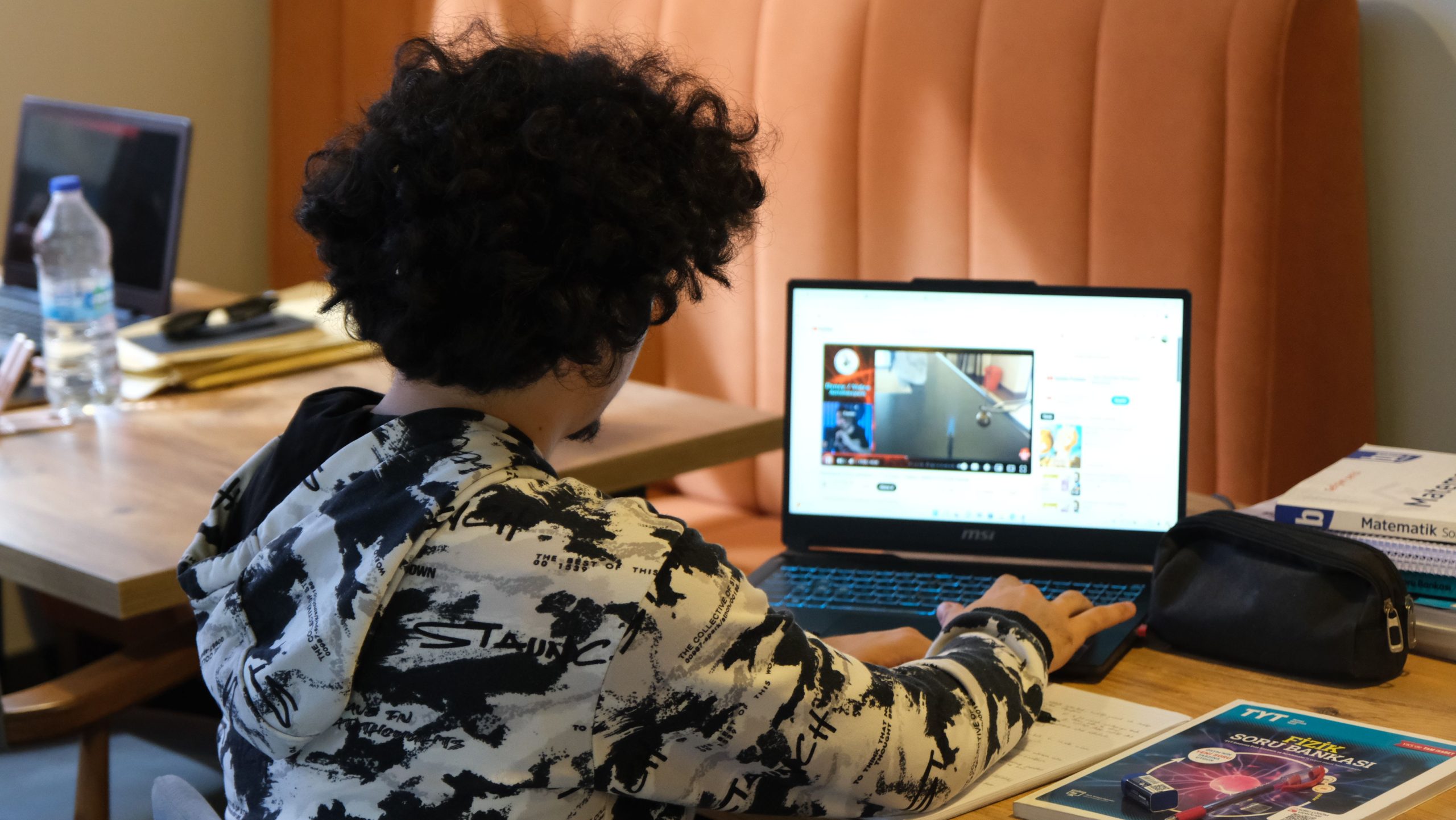
What would Paul have to say about online learning?
In the midst of a world where online learning remains a very real part of student life across South Africa, I want to pose a thought that may seem unusual—and perhaps even uncomfortable—to some, but hopefully encouraging to others:
What if the Apostle Paul were a student in our time?
What would he do with online learning? Would he complain about unreliable infrastructure, difficult circumstances, demanding coursework, or the pressure of completing a degree? Or would he find a way to keep going?
A lesson from Paul: Your circumstances don’t have to define you
In the Acts of the Apostles, we begin to learn how the early Church came into being. It is a remarkable story built on passion, sacrifice, faith, and dedication to the work of God.
Toward the end of Acts, we encounter Paul on a ship as a prisoner, caught in a violent storm and facing the very real possibility of death. Yet even in the middle of that crisis, Paul demonstrated leadership. He encouraged those around him and remained focused on others while wrestling with the waves.
That story gives us perspective. Paul endured difficult circumstances, but he refused to allow those circumstances to determine the purpose of his life. He captures this attitude beautifully in Philippians 1:21:
“For to me, living means living for Christ, and dying is even better.”
Paul understood that being with Christ would be better than anything this world could offer. Yet, if he continued living, he wanted his life to count. He wanted to serve Jesus and fulfil the work God had given him. And that brings me to the question:
What is motivating you to keep going with your studies?
1. Your situation doesn’t limit you. Don’t let it define you.
I would hate to pretend that we don’t have a struggling economy.
I would hate to pretend that we don’t face serious infrastructural challenges in South Africa—that ordinary people can wake up without running water, electricity, reliable internet access, or other resources that students often take for granted.
These challenges are real.
But consider what life was like for the people Paul ministered to in the first century. There was no electricity, no running water, no motor vehicles, no smartphones, no Wi-Fi, and certainly no online learning platforms. They had limitations too.
Yet they did not allow their limitations to define what was possible.
Paul travelled through difficult circumstances, endured persecution, imprisonment, shipwrecks, rejection and countless other trials. Yet he continued teaching, preaching, encouraging believers and helping establish churches across different regions. And he did much of his ministry through letters. No WhatsApp. No Zoom. No email. No mobile data. No fax machine either!
Communication must have been incredibly difficult. Yet God used Paul to communicate with believers across vast distances, and many of those letters became what we now know as Paul’s thirteen New Testament epistles.
That is remarkable. So perhaps our circumstances are not the question.
Perhaps the better question is:
What will I do with what I have?
Paul writes in 1 Corinthians 9:27:
“No, I strike a blow to my body and make it my slave so that after I have preached to others, I myself will not be disqualified for the prize.”
If you want that degree, you’ve got to work for it. Your circumstances may make the journey harder, but they do not have to determine where you end up. So ask yourself:
How can I glorify God with the knowledge and potential He has given me?
How can I improve the world around me by pressing forward despite difficult circumstances?
Your situation may explain some of your struggles.
It does not have to define your future.
2. If it wasn’t for Jesus, it probably wouldn’t have happened
We cannot talk about Paul’s endurance without talking about grace and faith.
In Acts 9, Paul’s encounter with Christ radically changed the direction of his life. The man who had once persecuted Christians became one of the most influential apostles in the history of Christianity.
His journey was ultimately a walk of faith. Paul had encountered Christ, and that encounter gave his life a completely different purpose. Faith doesn’t mean that the journey will suddenly become easy.
Faith means trusting God even when you cannot see the entire road ahead.
Paul reminds us:
“And now these three remain: faith, hope and love. But the greatest of these is love.”
— 1 Corinthians 13:13
Had it not been for the love of God, Paul would not have become the Paul we know today. Had it not been for the grace of God, his life would not have been transformed.
And had it not been for faith, perhaps he would have given up long before his ministry reached the places it eventually did.
So what about you? Where does your faith fit into your academic journey?
Can you make room for Christ in your studies? How has God’s grace helped you overcome circumstances and become the person you are today?
What has He set you free from? And perhaps most importantly:
What can you entrust to Christ as you pursue your education?
Your degree is important. Your career is important. Your future is important, but your identity does not begin and end with your academic results.
3. Avoid the haters and the naysayers—and stop comparing yourself to others
Oh yes, we have to talk about comparison. Paul knew what it was like to be compared to someone else.
In Corinth, there were people who criticised Paul’s appearance and communication skills:
“Paul’s letters are demanding and forceful, but in person he is weak, and his speeches are worthless!”
— 2 Corinthians 10:10
And then there was Apollos. Apollos was a gifted preacher and teacher. Paul himself acknowledged the importance of different ministers and their roles in building the Church.
Yet the Corinthians turned ministry into comparison.
Sound familiar? Imagine being told:
“You’re not smart enough.”
“Your grades aren’t as impressive.”
“You don’t belong in this programme.”
“Look at how well everyone else is doing.”
“Why can’t you be more like them?”
Students experience these comparisons all the time. There will always be someone with better grades. Someone with a stronger academic background. Someone who understands the material faster. Someone who speaks more confidently. Someone with better financial resources.
And, yes, there will also be people who struggle more than you.
But Paul gives us a warning in 2 Corinthians 10:12:
“We do not dare to classify or compare ourselves with some who commend themselves. When they measure themselves by themselves and compare themselves with themselves, they are not wise.”
Comparison can become a trap. You can spend so much time looking at someone else’s journey that you lose sight of your own. Paul wasn’t Apollos. And Apollos wasn’t Paul. They had different gifts, different personalities and different roles.
You don’t need to become someone else to fulfil what God has called you to do.
There will always be students who seem academically, spiritually or financially “ahead” of you. That doesn’t make their journey yours. And it doesn’t make you a failure.
Instead of constantly asking, “Am I better than them?”, ask:
“Am I becoming who God has called me to be?”
Stay on your path. Keep the end in mind.
4. Correct the thoughts that tell you you’re a failure
Sometimes the biggest “hater” isn’t another person. Sometimes it’s the voice in your own head.
Your lecturer might give you a disappointing mark. A classmate might make you feel inadequate. Your circumstances might make you question whether you belong. You might fail a test. You might fall behind. You might even wonder whether completing your degree is still possible. But a difficult season is not the same thing as a failed life.
Paul writes in 2 Corinthians 4:8–10:
“We are hard pressed on every side, but not crushed; perplexed, but not in despair; persecuted, but not abandoned; struck down, but not destroyed.”
Notice the language.
Hard pressed—but not crushed.
Perplexed—but not in despair.
Persecuted—but not abandoned.
Struck down—but not destroyed.
That is endurance.
So what are the thoughts you need to surrender to God? What statements have you been making about yourself that need to be challenged?
“I’m not smart enough.”
“I’ll never finish.”
“Everyone else is ahead of me.”
“I’m a failure.”
“I don’t belong here.”
Bring those thoughts before God. Fix your perspective. Put on the mind of Christ.
Your grades may tell you that you need to work harder in a particular subject. They do not get to tell you that you have no future.
So, what if Paul the Apostle were a student today?
If Paul were a student in our modern age, what kind of student would he be?
I imagine he would be educated, determined, resilient and filled with faith.
He would probably still face problems. He would probably still struggle. He would probably still encounter critics. But I suspect he would keep the bigger picture in mind. He would understand that a difficult season does not cancel a God-given purpose.
And perhaps that is the lesson for us. Online learning can be frustrating. South Africa’s challenges are real. Finances can be difficult. Internet connectivity can be unreliable. Life can throw unexpected storms at us. But your circumstances don’t have to define you.
Your comparison to someone else doesn’t determine your worth. And one bad semester does not have to become the conclusion of your story.
Keep going.
Work hard. Pray. Study. Ask for help. Trust God. And remember why you started. Like silver being refined in the fire, this season may not only make you stronger—it may make you better.
So, saints, let’s fight the good fight of faith and keep pressing forward.
I can’t wait to celebrate with you at graduation.
About The Author
